英国文化英文?英国的饮食文化介绍:The British generally prefer to cook in stew, barbecue, fry and fry. There are unique ways to cook meat, seafood and game.英国人一般较喜爱的烹饪方式有烩、烧烤、煎和油炸。对肉类、海鲜、野味的烹调均有独到的方式。那么,英国文化英文?一起来了解一下吧。
1. The United Kingdom, consisting of England, Northern Ireland, Scotland, and Wales, is a country with a rich historical and cultural background. Its capital, London, is located in England, which is why the British are often associated with England.
2. The term "British Isles" traditionally refers to the islands of England, Scotland, and Wales. However, since Northern Ireland is located on the island of Ireland, and due to the small size of regions like Gibraltar and others, they are not included in this term.
3. The UK is known for its social stability, secure lifestyle, low crime rates, and the rarity of violent occurrences. Its moderate climate experiences minimal extreme cold or heat, and the seasons, including spring, are well-defined.
4. Britain is recognized as a multicultural and tolerant society. Its art, music, culture, and cuisine have been influenced by the diverse populations from around the world who have migrated to the country, resulting in a rich tapestry of national customs.
5. The UK has maintained long-standing and close ties with English-speaking countries such as the United States, Canada, Australia, and New Zealand. These relationships remain strong to this day.
6. As a member of the European Union, the UK has played a significant role in the maintenance and development of relations between the EU and China, consistently advocating for and supporting these ties.
7. Britain is one of the largest investors in China among EU countries and was the first country in the world to industrialize. It has been the birthplace of numerous scientific discoveries and inventions, including the steam engine, penicillin, DNA, Dolly the sheep, and jet engines.
8. The British economy ranks fifth in the world and is the largest financial center in Europe. The London financial market draws numerous global companies seeking business opportunities within the UK.
9. The education system in the UK, particularly its schools and universities, attracts worldwide attention. The country has a history of exceptional education, traceable back to the twelfth century with the establishment of the University of Oxford (1185) and the University of Cambridge (1209).

obvously it is too huge a field to tackle and grapple with. What aspects are you talking about? And do you maen the general views or in-depth studies?
Also, websites in English is a good source of info. Cut n paste? If only you know what to select.

我们看到唐顿庄园中的英国贵族的生活可能会对英国文化感兴趣,今天我们就来聊一聊英国文化,英国文化的注意事项:
We see that the life of the English aristocracy in Downton Abbey may be of interest to British culture, and today we??'re going to talk about British culture and the notes of British culture:
语言交流Language and communication
交流隐私对英国人来说十分重要。尽量不要在相互不熟识的情况下去问个人的隐私问题,例如婚姻、有无孩子、恋爱关系、个人经济状况、健康等涉及私人的生活话题。
It is important for the British to communicate privacy. Try not to ask personal privacy questions without knowing each other, such as marriage, child or absence, relationship, personal financial situation, health, etc.
风俗礼仪与生活习惯Customs and rituals and habits.
英国人普遍有一种强烈的社会责任感,对公共事业、慈善事业等都很关注。
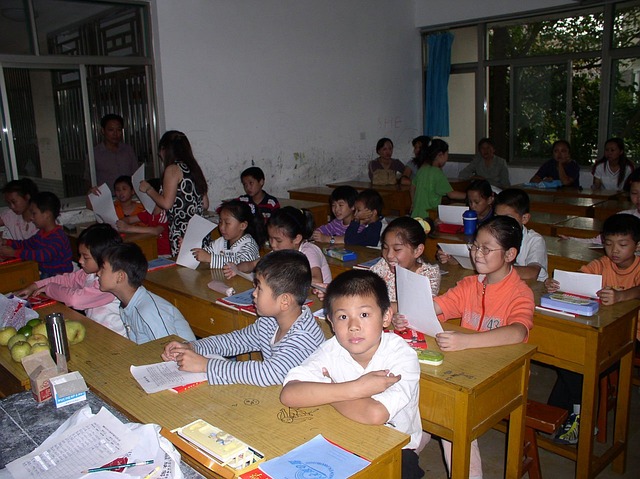
British culture. 英格兰,苏格兰,爱尔兰的文化都不太一样。
你说的“英国”大概是指 英格兰?
http://en.wikipedia.org/wiki/Culture_of_England
Culture of England
From Wikipedia, the free encyclopedia
Jump to: navigation, search
The culture of England is sometimes difficult to separate clearly from the culture of the United Kingdom, so influential has English culture been on the cultures of the British Isles and, on the other hand, given the extent to which other cultures have influenced life in England.
Art
The Hay Wain by John Constable is considered an archetypal English paintingMain article: English art
English art is a term referring to a body of art originating from England. Nikolaus Pevsner attempted a definition in his 1956 book The Englishness of English Art.
It has developed over several millenia, to recent movements such as Brit Art, and now encompasses a variety of forms - painting, photography, sculpture and performance art.
It is often considered that English landscape painting typifies the tradition of English art, mirroring as it does the development of the country house and its landscaping.
[edit]
Cuisine
Main article: English cuisine
England being the first industrialised country in the world, urbanised workers were in many cases cut off from regional food traditions. Some consider that English cuisine has consequently suffered from a widespread image of blandness and lack of distinctiveness. The openness of English diners to exotic dishes has also meant that English cooking does not enjoy as high a profile as other nations' culinary traditions. More recently, a new style of cooking called Modern British has emerged that combines traditional British ingredients with foreign culinary influences.
The Full English breakfast remains an enduring tradition for many, despite the increasing popularity of the continental-style breakfast, or no breakfast at all, for busy workers. Tea and beer are typical drinks. Cider is produced in the West Country, and the south of England has seen the reintroduction of vineyards producing high quality white wine on a comparatively small scale.
England produces a range of cheeses in various regions, including:
Stilton cheese
Wensleydale cheese
Lancashire cheese
Dorset Blue Vinney cheese
Cheshire cheese
Double Gloucester cheese
Red Leicester
Other foods associated with England include:
Sunday roast
Lancashire Hotpot
Cornish pasty
Spotted Dick
Mince Pies
Fish and chips (and mushy peas)
Clotted cream from Devon and Cornwall
Yorkshire pudding
Sausage and mash
Eccles cake
Scones
Shepherd's Pie
Cumberland sausage
British Curries
Balti
Chicken Tikka Masala
Other typical British dishes
[edit]
Folklore
Morris dancing is one of the more visible English folk traditions, with many differing regional variations.Main article: English folklore
English folklore is the folk tradition which has evolved in England over a number of centuries. Some English legends can be traced back to their roots, even as far as before the Roman invasion of Britain, while the origin of others is fairly uncertain or disputed. England abounds with folklore, in all forms, from such obvious manifestations as the traditional semi-mystical Arthurian legends and semi-historical Robin Hood tales, to contemporary urban myths and facets of cryptozoology such as the Beast of Bodmin Moor.
Morris dance and related practices such as the Abbots Bromley Horn Dance preserve old English folk traditions, as do Mummers Plays. The utopian vision of a traditional England is sometimes referred to as Merry England.
English mythology is no longer widely believed. Whereas some folklore legends were formerly believed nationally across the whole of England, most can generally be divided into regional areas of England.
[edit]
Heritage
In recent years, Stonehenge has become a focus for modern summer solstice celebrationsStonehenge holds an iconic place in the culture of England. Other built structures like cathedrals and parish churches are associated with a sense of Englishness. The English country house and the lifestyle associated for centuries with an élite minority now forms an interest among many people in England as typified by visits to properties managed by English Heritage or the National Trust.
Landscape gardening as developed by Capability Brown set an international trend for the English garden. Gardening and visiting gardens are also a facet of the culture of England for many people.
Historic houses in England
English Heritage Properties in England
List of National Trust properties in England
[edit]
Literature
William Hogarth's depiction of a scene from Shakespeare's The Tempest is an example of how English literature influenced English painting in the 18th centuryMain article: English literature
The term English literature refers to literature written in the English language, or literature composed in English by writers who are not necessarily from England. Writers noted for expressing Englishness, or associated particularly with regions of England, include William Shakespeare, Charles Dickens, Thomas Hardy (Wessex), A. E. Housman (Shropshire), Rupert Brooke, Jane Austen, Arnold Bennett and the Lake Poets (Lake District).
But Joseph Conrad was Polish, Robert Burns was Scottish, James Joyce was Irish, Edgar Allan Poe was American, Salman Rushdie is Indian: all have enriched English literature.
List of English novelists
Anglo-Saxon literature
Elizabethan theatre
Big six in the romantic literature of England
[edit]
Music
Main article: Music of England
England has a long and rich musical history. The United Kingdom has, like most European countries, undergone a roots revival in the last half of the 20th century. English music has been an instrumental and leading part of this phenomenon, which peaked at the end of the 1960s and into the 1970s.
The achievements of the Anglican choral tradition following on from 16th century composers such as Thomas Tallis, John Taverner and William Byrd have tended to overshadow instrumental composition. The semi-operatic innovations of Henry Purcell did not lead to a native operatic tradition, but George Frederick Handel found important royal patrons and enthusiastic public support in England. The rapturous receptions afforded by audiences to visiting musical celebrities such as Haydn often contrasted with the lack of recognition for home-grown talent. However, the emergence of figures such as Edward Elgar and Arthur Sullivan in the 19th century showed a new vitality in English music. Ralph Vaughn Williams and others collected English folk tunes and adapted them to the concert hall. Cecil Sharp was a leading figure in the English folk revival.
Finally, a new beat out of Liverpool emerged in 1962. The Beatles: John Lennon, Paul McCartney, George Harrison, and Ringo Starr, became the world's most popular musicians of all time. The "Fab Four" opened the doors for British acts such as The Rolling Stones, The Who, Queen, Iron Maiden and Led Zeppelin to the globe.
Some of the leading contemporary artists include Kaiser Chiefs, The Arctic Monkeys, Robbie Williams and Coldplay.
[edit]
Religion
The Church of England functions as the established church in England. Other churches which have started in England include the Methodist church, the Quakers and the Salvation Army.
See also Religion in England.
[edit]
Sport and leisure
Cricket, football and rugby union are generally considered the national games. In recent years, more specifically after the 2003 Rugby World Cup, rugby union has become increasingly popular; as has cricket, following England's success in regaining the Ashes in 2005.
Football in England
Cricket in England
Rugby union in England
~~~~~~~~~~~~~~~~~~~~~~~~~~~~~~~~
Culture
William Shakespeare.Main article: Culture of England
The culture of England is sometimes difficult to separate clearly from the culture of the United Kingdom, so influential has English culture been on the cultures of the British Isles and, on the other hand, given the extent to which other cultures have influenced life in England. It has also been spread over large parts of the globe due to the British Empire.
England has produced many famous authors including William Shakespeare, arguably the most famous in the history of the English language. This tradition has continued with the likes of Jane Austen, Charles Dickens and Virginia Woolf, who are all often considered among the greatest writers of their time[citation needed]. Among these, stand the likes of many great English poets such as Lord Byron, John Keats, Samuel Taylor Coleridge and many others. Also, Britain remained a central figure of literacy excellence throughout the past few centuries, notably Romanticism and Modernists.
Composers from England did not achieve the same recognition in comparison to their literary counterparts and were often overshadowed by European composers. However, in popular music English bands such as The Beatles and The Rolling Stones have achieved success only rivaled by U.S. music. England is also credited for being the birth place of many pop culture movements, notably punk and acid house.
http://www.britainexpress.com/History/english-culture.htm
http://en.wikipedia.org/wiki/England
http://en.wikipedia.org/wiki/Scotland
The culture of the United Kingdom is rich and varied, and has been influential on culture on a worldwide scale.
It is a European state, and has many cultural links with its former colonies, particularly those that use the English language (the Anglosphere). Considerable contributions to British culture have been made over the last half-century by immigrants from the Indian Subcontinent and the West Indies. The origins of the UK as a political union of formerly independent states has resulted in the preservation of distinctive cultures in each of the home nations.
Language
Main article: Languages in the United Kingdom
The United Kingdom has no official language. English is the main language and the de facto official language, spoken monolingually by an estimated 95% of the UK population.
However, some nations and regions of the UK have frameworks for the promotion of their autochthonous languages. In Wales, English and Welsh are both widely used by officialdom, and Irish and Ulster Scots enjoy limited use alongside English in Northern Ireland, mainly in publicly commissioned translations. Additionally, the Western Isles council area of Scotland has a policy to promote Scottish Gaelic.
Under the European Charter for Regional or Minority Languages, which is not legally enforceable, the UK Government has committed itself to the promotion of certain linguistic traditions. Welsh, Scottish Gaelic and Cornish are to be developed in Wales, Scotland and Cornwall respectively. Other native languages afforded such protection include Irish in Northern Ireland, Scots in Scotland and Northern Ireland, where it is known in official parlance as "Ulster Scots" or "Ullans" but in the speech of users simply as "Scotch", and British Sign Language.
The Arts
Literature
Sherlock Holmes, played here by Jeremy Brett, was created by British author Arthur Conan Doyle.Main article: British literature
The earliest native literature of the territory of the modern United Kingdom was written in the Celtic languages of the isles. The Welsh literary tradition stretches from the 6th century. Irish poetry also represents a more or less unbroken tradition from the 6th century to the present day, with the Ulster Cycle being of particular relevance to Northern Ireland.
Anglo-Saxon literature includes Beowulf, a national epic, but literature in Latin predominated among educated elites. After the Norman Conquest Anglo-Norman literature brought continental influences to the isles.
English literature emerged as a recognisable entity in the late 14th century, with the rise and spread of the London dialect of Middle English. Geoffrey Chaucer is the first great identifiable individual in English literature: his Canterbury Tales remains a popular 14th-century work which readers still enjoy today.
Following the introduction of the printing press into England by William Caxton in 1476, the Elizabethan era saw a great flourishing of literature, especially in the fields of poetry and drama. From this period, poet and playwright William Shakespeare stands out as arguably the most famous writer in the world.
The English novel became a popular form in the 18th century, with Daniel Defoe's Robinson Crusoe (1719), Samuel Richardson's Pamela (1740) and Henry Fielding's Tom Jones (1745).
After a period of decline, the poetry of Robert Burns revived interest in vernacular literature, the rhyming weavers of Ulster being especially influenced by literature in Scots from Scotland.
The following two centuries continued a huge outpouring of literary production. In the early 19th century, the Romantic period showed a flowering of poetry comparable with the Renaissance two hundred years earlier, with such poets as William Blake, William Wordsworth, John Keats, and Lord Byron. The Victorian period was the golden age of the realistic English novel, represented by Jane Austen, the Brontë sisters (Charlotte, Emily and Anne), Charles Dickens, William Thackeray, George Eliot, and Thomas Hardy.
World War One gave rise to British war poets and writers such as Wilfred Owen, Siegfried Sassoon, Robert Graves and Rupert Brooke who wrote (often paradoxically), of their expectations of war, and/or their experiences in the trench.
The Celtic Revival stimulated new appreciation of traditional Irish literature, however, with the independence of the Irish Free State, Irish literature came to be seen as more clearly separate from the strains of British literature. The Scottish Renaissance of the early 20th century brought modernism to Scottish literature as well as an interest in new forms in the literatures of Scottish Gaelic and Scots.
The English novel developed in the 20th century into much greater variety and was greatly enriched by immigrant writers. It remains today the dominant English literary form.
Other well-known novelists include Arthur Conan Doyle, D. H. Lawrence, George Orwell, Salman Rushdie, Mary Shelley, Zadie Smith, J. R. R. Tolkien, Virginia Woolf and J.K. Rowling.
Important poets include Elizabeth Barrett Browning, T. S. Eliot, Ted Hughes, John Milton, Alfred Tennyson, Rudyard Kipling, Alexander Pope, and Dylan Thomas.
Religion
Main article: Religion in the United Kingdom
Although today one of the most 'secularised' states in the world, the United Kingdom is traditionally a Christian country, with two of the Home nations having official faiths:
Anglicanism, in the form of the Church of England, is the Established Church in England. The Queen is Supreme Governor of the Church of England.
Presbyterianism (Church of Scotland) is the official faith in Scotland.
The Anglican Church in Wales was disestablished in 1920.
The Anglican Church of Ireland was disestablished in 1871.
Other religions followed in the UK include Islam, Hinduism, Sikhism, Judaism, and Buddhism. While 2001 census information [2] suggests that over 75 percent of UK citizens consider themselves to belong to a religion, Gallup International reports that only 10 percent of UK citizens regularly attend religious services, compared to 15 percent of French citizens and 57 percent of American citizens. A 2004 YouGov poll found that 44 percent of UK citizens believe in God, while 35 percent do not [3]. The disparity between the census data and the YouGov data has been put down to a phenomenon described as "cultural Christianity", whereby many who do not believe in God still identify with the religion they were bought up as, or the religion of their parents.
[edit]
Food
Main article: British cuisine
Although there is ample evidence of a rich and varied approach to cuisine during earlier historical periods (particularly so amongst wealthy citizens), during much of the 19th and 20th century Britain had a reputation for somewhat conservative cuisine. The stereotype of the native cuisine was of a diet progressing little beyond stodgy meals consisting of "meat and two veg". Even today, in more conservative areas of the country, "meat and two veg" cuisine is still the favoured choice at the dinner table.
Traditional British fare usually includes dishes such as fish and chips, roast dishes of beef, lamb, chicken and pork, as well as regional dishes such as the Cornish pasty and Lancashire Hotpot.
On 8 January 1940, four months after the outbreak of World War II, a system of food Rationing was introduced to conserve stocks and feed the nation during the critical war years. Rationing persisted until July 4, 1954 [4] when a fourteen year period of relative privation (which profoundly affected a generation of people attitude to 'a culture of food') finally came to an end. With the end of rationing, Britain's diet began to change, slowly at first during the 1950s and 1960s, but immeasurably by the closing decades of the 20th century.
During the transitional period of the 1970s, a number of influential figures such as Delia Smith (perhaps Britain's most famous homegrown exponent of good food), began the drive to encourage greater experimentation with the new ingredients (e.g. pasta) increasingly being offered by the supermarkets. The evolution of the British diet was further accelerated with the increasing tendency of the British to travel to continental Europe (and sometimes beyond) for their annual holidays, experiencing new and unfamiliar dishes as they travelled to countries such as France, Italy, and Spain.
Towards the mid to late 1990s and onwards an explosion of talented new 'TV chefs' began to come to prominence, (with figures as diverse as Jamie Oliver, Ainsley Harriott, Ken Hom, Nigella Lawson, Madhur Jaffrey, Nigel Slater, and Keith Floyd) this brought about a noticeable acceleration in the diversity of cuisine the general public were prepared to try and their general confidence in preparing food that had would once have been considered pure staples of foreign cultures, particularly the Mediterranean European, South and East Asian diets. As a result, a new style of cooking called Modern British emerged.
This process of increased variety and experimentation in food inevitably dovetailed with the very profound impact that the post-war influx of immigrants to the UK (many from Britain's former colonies in the Caribbean and Indian sub-continent) had on the national cuisine. The new communities propelled new and exciting dishes and ingredients onto restaurant tables and into the national consciousness. In many instances, British tastes fused with the new dishes to produce entirely new dishes such as the Balti, an English invention based on Indian cuisine that has since gained popularity across the world. Many of these new dishes have since become deeply embedded in the native culture, culminating in a speech in 2001 by Foreign Secretary, Robin Cook, in which he described Chicken Tikka Masala as 'a true British national dish' [5].
With the rich diversity of its peoples and its (arguably) relatively successful attempts at creating a true multicultural society, married to a reputation as an experimental and forward thinking nation, the future of British cuisine looks positive.
[edit]
Education
University College, Oxford was founded in the 13th centuryMain article: Education in the United Kingdom
The education system in the United Kingdom varies in important respects between England, Wales, Scotland and Northern Ireland. Education is devolved to the Scottish Parliament and the assemblies in Wales and Northern Ireland.
Education is compulsory for all children between the ages of five and sixteen. Most children in the UK are educated in state funded schools financed through the tax system and so parents do not pay directly for the cost of education.
Less than ten percent of the UK school age population attend independent fee-paying schools. Many prominent independent schools, often founded hundreds of years ago, are known as public schools of which Eton, Harrow and Rugby are three of the better known.
Most primary and secondary schools in both the private and state sectors have compulsory school uniforms. This is a contentious point with generations of school children who would like to see them abolished, only to support their retention once they become parents, this is due to people wanting to have a 'uniform' appearance in schools and it reduces the brand logo culture from coming out in educational establishments. Due to the multicultural nature of England, some allowances have had to be made in the uniform regulations to accommodate the needs of some children's religious beliefs.
[edit]
England
Main article Education in England
Most schools came under state control in the Victorian era, a formal state school system was instituted after the Second World War. Initially schools were separated into infant schools (normally up to age 4 or 5), primary schools and secondary schools (split into more academic grammar schools and more vocational secondary modern schools). Under the Labour governments of the 1960s and 1970s most secondary modern and grammar schools were combined to become comprehensive schools.
Although the Minister of Education is responsible to Parliament for education, the day to day administration and funding of state schools is the responsibility of Local Education Authorities.
[edit]
Northern Ireland
Main article Education in Northern Ireland
[edit]
Scotland
Main article Education in Scotland
[edit]
Wales
Main article Education in Wales
[edit]
Higher education
The United Kingdom includes many historic universities. These include the so-called Oxbridge universities (Oxford University and Cambridge University) which are amongst the world's oldest universities and are generally ranked at or near the top of all British universities. Other universities include the University of St Andrews, the oldest university in Scotland. Academic degrees are usually split into classes: first class (I), upper second class (II:1), lower second class (II:2) and third (III), and unclassified (below third class).
[Sport
Main article: Sport in the United Kingdom
The national sport of the UK is football, and the UK has the oldest football clubs in the world. The home nations all have separate national teams and domestic competitions, most notably the Scottish Premier League, the FA Cup and the FA Premier League. The first ever international football match was between Scotland and England in 1872. The match ended goalless.
Other famous British sporting events include the Wimbledon tennis championships, the Grand National, the London Marathon, the ashes series of cricket matches and the boat race between Oxford and Cambridge universities.
A great number of major sports originated in the United Kingdom, including: Football (soccer), squash, golf, boxing, rugby (rugby union and rugby league), cricket, snooker, billiards, badminton and curling.
[edit]
National costume
The kilt is a traditional Scottish garmentThere is no specifically British national costume. Even individually, England, Wales and Northern Ireland have only vestiges of a national costume; Scotland has the kilt and Tam o'shanter. In England certain military uniforms such as the Beefeater or the Queen's Guard are considered by tourists to be symbolic of Englishness, however they are not official national costumes. Morris dancers or the costumes for the traditional English may dance are cited by some as examples of traditional English costume.
[edit]
Naming convention
The naming convention in most of the United Kingdom is for everyone to have a given name, usually (but not always) indicating the child's sex, followed by a parent's family name. This naming convention has remained much the same since the 15th century in England although patronymic naming remained in some of the further reaches of the other home nations until much later. Since the 19th century middle names have become very common and are often taken from the family name of an ancestor.
Traditionally given names were largely taken from the Bible however in the Gothic Revival of the Victorian era Anglo Saxon and mythical names became commonplace. Since the middle of the 20th century however given names have been influenced by a much wider cultural base.
http://en.wikipedia.org/wiki/British_culture
以上就是英国文化英文的全部内容,We see that the life of the English aristocracy in Downton Abbey may be of interest to British culture, and today we??'re going to talk about British culture and the notes of British culture:语言交流Language and communication 交流隐私对英国人来说十分重要。内容来源于互联网,信息真伪需自行辨别。如有侵权请联系删除。