名人英文演讲?1、马丁·路德·金 I have a dream! ;2、贝拉克·奥巴马 The victory speech of Barack Obama;3、曼德拉 on the future of Africa;4、甘地 The Quit India speech by Mahatma Gandhi;5、丘吉尔 BLOOD, SWEAT AND TEARS(就职演讲) Never give up !(最后的演讲)。还有很多,向林肯、那么,名人英文演讲?一起来了解一下吧。
The Gettysburg Address by President Lincoln
Fourscore and seven years ago, our fathers brought forth upon this continent a new Nation, conceived in Liberty, and dedicated to theproposition that all men are created equal. Now, we are engaged in a great Civil War, testing whether that Nation, or any nation soconceived and so dedicated, can long endure. We are met on a great battlefield of that war. We have come to dedicate a portion of that field as a final resting-place for those who gave their lives that Nation might live. It is altogether fitting and proper that we should do this.
But, in a larger sense, we cannot dedicate, we cannot consecrate, we cannot hallow this ground. The brave men, living and dead, who struggled here, have consecrated it far above our power to add or detract. The world will little note nor long remember what we say here, but it can never forget what they did here. It is for us, the living, rather to be dedicated to the great task remaining before us; that from these honored dead, we take increased devotion to that cause for which they gave the last full measure of devotion; that this Nation, under GOD, shall have a new birth of freedom; and that government of the People by the People and for the People shall not perish from the earth."
Abraham Lincoln
政治名人英语演讲金句素材安德森·库珀:失败中创造机遇
金句:"But it actually was the best thing that ever happened to me. I decided that if no one would give me a chance, I'd have to take a chance, and if no one would give me an opportunity, I would have to create my own opportunity."
适用主题:逆境成长、主动争取机会、突破自我局限。
解析:库珀以自身经历诠释“危机即转机”,强调在无人提供机会时,需通过自我驱动开辟道路。适用于论述“主动作为”或“从挫折中崛起”的作文场景。
巴拉克·奥巴马:责任与自我坚守金句:"And even when you're struggling, even when you're discouraged, and you feel like other people have given up on you, don't ever give up on yourself, because when you give up on yourself, you give up on your country."
适用主题:个人与国家的关系、逆境中的信念、青年责任。
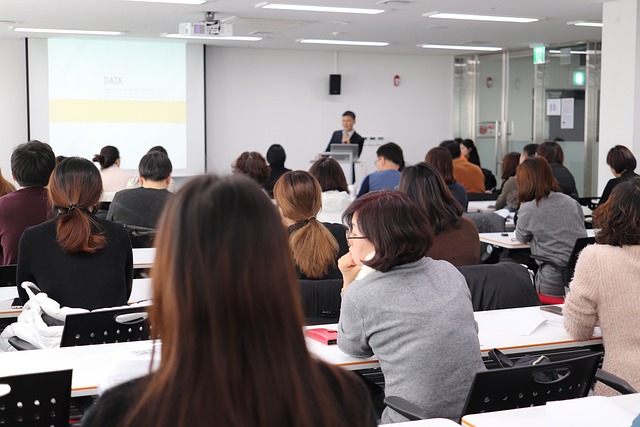
LECTURE BY JOHN BRUTON T.D.FORMER TAOISEACH
AND NOW MEMBER OF THE PRAESIDIUM
OF THE CONVENTION ON THE FUTURE OF EUROPE
TO THE WOODROW WILSON CENTER WASHINGTON D.C.
ENTITLED
“PROSPECTS FOR THE CONVENTION ON THE FUTURE OF EUROPE”
Wednesday 13th November 2002 at 4.00 p.m. (U.S.Time)
The Convention on the Future of Europe was set up earlier this year, to produce by June 2003, a basis for a new Constitutional Treaty for the European Union. A Union, that will be able to accommodate up to 30 states.
The European Union is a detailed and binding contract between States, built on the ideal of an ever closer Union between the peoples of Europe.It is a constitutional endeavour of unprecedented scale, and it makes European law superior to laws of the States inall the areas of activity that are the subject of the contract.
In this address I want to deal with the following issues.
1. Why should a United States audience be interested in the work of the Convention on the Future of Europe ?
2. What is the background in recent European history, to the creation of the current Convention on the Future of Europe ?
3. What are the key success factors for the Convention?
4. What are the risks to the project ?
RELEVANCE TO UNITED STATES
The Model of Philadelphia
The results of the work of the Convention on the Future of Europe will strongly influence the way our transatlantic relationships will evolve.
From the perspective of a United States audience it is important to point out the Convention on the Future of Europe is, to some extent, modeled on the 1787 Philadelphia Convention, which led to the forming of a federal United States of America and replaced the con-federal arrangements that had existed since the end of the War of Independence.The formation of the Federal Union of the United States at Philadelphia was driven, as much by necessity as by idealism.As the people who met in Philadelphia too, realized it would be necessary to share some of the functions of Government.
The Convention on the Future of Europe is also driven, to a degree at least, by necessity. As the Union enlarges from 15 to 25 members, the arrangements for 15, already strained, are perceived as being completely inadequate to accommodate a Union of 25 states.But just as there was no consensus in Philadelphia about the ultimate extent of enlargement of the United States, there is no consensus in Brussels today about the ultimate shape and size of the European Union.
While the existing enlargement to include 10 new member states is taken for granted, there is no final consensus about the ultimate limits of the Union.But if the texts being considered are taken literally, there is no theoretical obstacle to Russia joining the European Union, but I doubt if many of the members have really accommodated themselves to that possibility in their hearts as yet. Certainly, if Turkey of which only eastern Thrace is in Europe, is admitted to membership, no theoretical basis would then exist to exclude Russia – the vast bulk of whose population live in Europe.
It is important also to make a comparison between the size of the endeavors undertaken in Philadelphia and in Brussels. In Philadelphia the attempt was being made to unite people, many of whom spoke the same language, and whose population amounted to a mere 4 million people.
On the other hand in Brussels, we are endeavoring to define a constitution that will accommodate up to 500 million people who speak 20 different national languages.
Whereas the Convention members who met in Philadelphia sat in constant session, six days a week from 29th May until 17th September with an average attendance of 30 people, the Convention on the Future of Europe has only sat in plenary session for 20 days, is composed of 105 number of participants, with an average attendance of 85and is attempting a much larger task in actual and practical terms. Members have much less time, then did the Convention members in Philadelphia, to meet informally in a social setting, the setting in which durable understandings emerge and compromises become visible.
It might also be added that those who met in Philadelphia represented an elite, who could expect to carry their States and constituents with them in whatever they agreed. In Europe in the early 21st century, there is a much less accepting attitude towards the doings of politicians than there might have been in late 18th century America. In some countries the work of the Convention will have to be put to the people in a Referendum, and there is a generally sceptical attitude in sections of the population towards European integration.Furthermore, whereas the meetings in Philadelphia were strictly private, discussions in Brussels are in public.
In Philadelphia, there was a rough consensus before the proceedings began as to what was to be created – a more centralized system for all the States. In the Brussels Convention some members want more centralization to deal with necessary tasks and others want less centralization.
Some of the very same issues, which manifested themselves in Philadelphia so many years ago, are emerging again in Brussels today.The relative representation of smaller and the larger states, so hot an issue in Philadelphia, is an equally heated one in Brussels.
Another common issue is the method for ratification of the new Constitution. The E.U. practice up to now has been that every state must ratify a new constitutional treaty before it comes into effect. At Philadelphia, the ultimate agreement was that it would be sufficient for three-quarters of the states to ratify it for the Constitution to come into effect. Some in Brussels are now advocating that we follow that precedent. This is exceptionally controversial with the smaller states and with those who have to have referenda on E.U. Treaties.They fear being excluded from the Union altogether as a result of a failure to carry in a referendum.
The Marshall Plan
The Marshall plan of the United States in 1947 was a key driver towards the European Union as we know it today.
Secretary of State Marshall made it clear to Europe in May 1947 that U.S. aid for post-war reconstruction would only get Congressional approval, if the European countries took steps to ensure that the money was spent between them in a co-operative way.In Paris, just a month later, sixteen nations met to form the European Economic Co-Operation Organization – later to become the O.E.C.D.The dismantling of intra-European trade barriers, the setting up of a European Payments Union (the fore-runner of the present single currency) and the Treaty of Rome itself can all be traced back to the requirements of the Marshall initiative.
The Role of President George Bush Snr
More recently still, the United States has played a key role insetting the scene for the present phase in European history – the enlargement of the Union to include the countries of central and eastern Europe.In 1989 The United States had a choice.It was clear that the SovietEmpire was beginning to dissolve.Gorbachev was still in power. The United States could then have sought to prop up the Soviet Union.A plan was put forward by Henry Kissinger for a Yalta-like agreement over the heads of the East Europeans to maintain spheres of influence in Europe. This would have prevented the integration of countries of the former Warsaw Pact in the European Union, leaving some or all of them in a Russian sphere of influence.
President George Bush Snr., chose not to take that course. In an important speech on the 17th April 1989, in Hamtramck Michigan, the President said
“We dream of the day when Eastern European peoples will be free to choose their system of government and to vote in regular, free, contested elections.We dream of the day when Eastern European countries will be free to choose their own peaceable course in the world, including closer ties with Western Europe”.
The President went on to say :
“The true source of tension is the imposed and unnatural division of Europe.We accept no spheres of influence that deny the sovereign rights of nations”.
In a speech at Boston University on 21st May 1989, he went even further.
He said “
“This administration is of one mind. We believe a strong, united Europe, means a strong America”.
What we are doing in Brussels now, in the Convention on the Future of Europe, is making arrangements to ensure that the strong United Europe envisaged in 1989 by President Bush, comes into operation on a basis that will work in practical terms.
The United States thus has a huge investment in Europe, - moral, political, economic and strategic. It should not see a united Europe as a threat to United States interests, but rather as the fulfillment of a long-sighted, well considered, United States strategy.
There is mutual inter-dependence between Europe and the United States.We must make that structure of mutual inter-dependence work to the benefit of everyone.
THE EUROPEANHISTORICAL CONTEXT OF THE CONVENTION
I now move to my second question – What is the background,in recent European history to the creation of the Convention on the Future of Europe? The Europeans were determined never again to be at war with one another.In an historic declaration on the 9th May 1950, Robert Schumann Minister for Foreign Affairs of France stated that :
“Europe will not be made all at once, or according to a single plan. It will be built through concrete achievements which first create de-facto solidarity”.
In other words, he opted for a functional method of integration, building on results achieved, rather than an idealized system towards which one would then work.
The first step towards creating de-facto solidarity was the establishment of the European Coal and Steel Community.Given that coal and steel were the traditional instruments of war, it was essential that the coal and steel industries of Germany and France would be so integrated with one another that neither would ever again be independent enough to go to war with the other.
Germany and France were in future to be like boxers in a clinch, so close to one another that neither could swing a punch !
This worked.
Six countries then moved on to a more ambitious stage when in 1955 in the Messina Declaration, they envisaged the creation of a common free market in goods between Germany, France, Belgium, Italy, Luxembourg and The Netherlands. Britain was also invited to join. This common market was finally launched in the Treaty of Rome in 1957 (without Britain).
It was based on four fundamental freedoms, freedom of movement of goods, freedom of movement of salaried workers, freedom of establishment of businesses, and freedom of capital movements.
In 1973, Denmark, Ireland and the United Kingdom, joined this Common Market.Greece joined in 1981, Spain and Portugal joined in 1986 and Austria, Finland and Sweden became members in 1995.
But by the mid 1980’s it had been found that the planned Common Market had not been fully achieved. This was because so many of the decisions, necessary to allow free movement of goods like common standards for labelling, had to taken by unanimous vote.
This unanimous voting system was abandoned for market opening measures, in the Single European Act of 1987. This Act committed the members to adopt measures to progressively establish a fully free and openinternal market by the end of 1992.
The next stage was the Treaty of Maastricht of 1992.This Treaty took forward four basic projects.
The first was the establishment of a single European currency (eventually achieved in 1999).
The second was the establishment of a Common Foreign and Security Policy (still very far from being achieved – although some progress has been made).
The third was the introduction of a concept of citizenship of the Union in addition to individual citizenship of individual member states. (This is a rather vague aspiration, so it is unclear whether it has been achieved or not).
Fourthly, Maastricht envisaged closer co-operation on Justice and Home Affairs –crime and civil law co-operation. (Slow but steady progress has been made here.We now have a common European Arrest Warrant, to provide for free extradition between member states, but that only came about as a response to September 11th)
The next landmark in Europe’s development was the Treaty of Amsterdam of 1997. It set out to place employment and citizen’s rights at the heart of the Union and to give Europe a stronger voice in world affairs.
Then the Treaty of Nice, of 2000 made new arrangements to alter the composition of the European Commission, for weighting of votes in the European Council, and for more majority voting, to prepare for the accession of 10 new members mainly from central and eastern Europe.
All of these different treaties have been added on top of one another.Each was an amendment of a previous treaty. Thus they are almost impossible to read in any coherent way.They cannot be compared to the comparatively readable, and simple, United States constitution.
One of the roles that has now been given to the Convention on the Future of Europe is to produce a single simple treaty, that will bring together all the strands in the earlier Treaties.
The mandate of the Convention on the Future of Europe is set out in an Annex to the communiqué issued at the European Council (of Heads of State and Prime Ministers) in Laeken on 14th and 15th December 2001.It stated :-
“At long last, Europe is on the way to becoming one big family, without blood-shed. This is a real transformation clearly calling for a different approach from 50 years ago when six countries first took the lead”.
It then said what the Convention had to do.
Firstly, it was to achieve a better vision and definition of competences in the European Union as between the Union, its different institutions, and individual member states.
It was to simplify the Union’s instruments, in other words to simplify the way the European Union makes laws and enforces them.
It was to introduce more democracy, transparency and efficiency into the European Union. This raised questions such as how the European Commission should be elected, in particular how its President might be chosen.
It was also asked to consider whether the European Union needed a single electoral method for selecting members of the European Parliament, whether the powers of the European Parliament should be enhanced, and whether there should be a greater role for the parliaments of member states in European integration.
Finally, it was also asked to consider whether more issues should be decided by qualified majority vote in the Council of Ministers (e.g. foreign policy and crime policy), and whether the proceedings of the Council of Ministers should be more open to the public.
In addition to its Chairman and Vice-Chairmen, the Convention is composed of 15 representatives of the Heads of State or Government of the Member States (one from each Member State), 30 members of national parliaments (two from each Member State), 16 members of the European Parliament and two Commission representatives. The accession candidate countries will be fully involved in the Convention’s proceedings. They will be represented in the same way as the current Member States (one government representative and two national parliament members) and will be able to take part in the proceedings without, however, being able to prevent any consensus which may emerge among the Member States.
The members of the Convention may only be replaced by alternate members if they are not present.
The Praesidium of the Convention is made up of the Convention Chairman and Vice-Chairmen and nine members drawn from the Convention (two representatives of all the governments holding the Council Presidency during the Convention, two national parliament representatives, two European Parliament representatives and two Commission representatives).
Three representatives of the Economic and Social Committee with three representatives of the European social partners; from the Committee of the Regions: six representatives (to be appointed by the Commmittee of the Regions from the regions, cities and regions with legislative powers),and the European Ombudsman will be invited to attend as observers.The Presidents of the Court of Justice and of the Court of Auditors may be invited by the Praesidium to address the Convention.
SUCCESS FACTORS FOR THE CONVENTION
The main areas in which progress has so far been made has been the agreement that the Union should have a single legal personality, on how the treaties might be simplified, on the basic structure of a simplified treaty, and on introducing mechanisms to ensure that the so-called principle of subsidiarity works.There is an excellent spirit of consensus in the Convention, and it is likely we will reach agreement on opening up the legislative sessions of the Council of Ministers to the public.
The main area in which the Convention notably failed to reach consensus is that of economic governance (which concerns the economic policy underpinning the Euro).The Convention has not yet really started to deal with the most difficult issue of all– the institutional arrangements – the distribution of powers between the Commission and the Councilof Ministers, and the relationship of voting strength between small and large states.
What are the key success factors for the Convention on the Future of Europe ?
It is important to stress that the job of the Convention is to produce a document that will be the basis for a draft treaty. That draft will then go to an Inter Governmental Conference, where the member governments of the European Union will make the final decisions.
Vital Role of Government Representatives
The extent to which the Convention representatives of governments canbind their own governments at home will be crucial. If government representatives agree to things in the Convention, which are subsequently disavowed by their home governments, that will make nonsense of the Convention. This places a huge, but entirely necessary, burden on the shoulders of the government representatives in the Convention.
My own feeling is that some of the representatives of member governments do not have sufficiently precise instructions from their home governments. Some member governments are paying insufficient attention to the work of the Convention.
Their representatives are forced to make it up as they go along. This, if it continues when we get into the real crucial negotiating stage,will be a recipe for failure.
It is essential that member governments address this now, re-read the Laeken declaration thoroughly, give very clear instructions to their representatives.These instructions should contain a provision for referring back to ensure that an initial position can be modified, as part of a dynamic negotiating process leading to ultimate consensus and agreement.
A European battle against organized crime and terrorism
If the European Union is to win the maximum support of its citizens, it must show that it can deliver concrete results on issues that really matter to people. The Convention will be deemed to be a success if it shows that it has put in place mechanisms for making Europe’s streets safe, and helping in the battle against global terrorism.

经典名人英语演讲稿
外语教学的不断改进,各类英语演讲活动愈来愈频繁,以下是我整理的经典名人英语演讲稿的内容,欢迎阅读!
篇一:经典名人英语演讲稿
Good morning,ladies and gentlemen,today i am so happy to stand here to give you a speech.Or rather, a real story of mine.
Though with time going by,i can still remember what you once told me.You should be a brave girl.Smiling,you looked into my eyes.Year in,year out,nearly most of my memories are fading little by little.But only this simple sentence remained,without being forgotten in my life.
Again and again,i can not stop myself from thinking about it.So ordinary,but so impressive,so moving,just like the brightest sunshine,it helps me go through the darkest night.I am such a sensitive girl in your heart.You said,my sorroful facial expression made feel so distersssed.However,there is one thing i never tell you,that is ,i am becoming a big girl gradually with your words and smiles.I never tell you about it,for i believe oneday,you can see the great changes of mine for yourself.That is what i want to do in return.As i know,that will be the best gift for you.
I suddenly think of a song named MY HEART WILL GO ON.There is a beautiful sentence going like this.You are safe in my heart.More than once,i was moved to tears by it.I know ,i am also safe in your heart.i have already forgotten when i told you i was going to leave for Australia this summer holiday.You just smiled as usual,gently speaking.Whatever you decide to do,i will be in favor of it,but, just onething,remember,when you fell lonely abroad,do not forget we are here ,praying for you.We are all around you,far across the distance and space between us.i closed my eyes,the flashback started.The memories we had together,once we played games on the palyground,we played jokes on each other,you always wrote a lot of sentences on my articles to encourage me.And the most unforgetable thing,you told me,you believed m i could be a big girl.Sooner or later.
At that specific moment,i suddenly understood the meaning of this sentence totally.So on that day,i smiled as you used to,looking at you.The last words i said were,keep walking in sunshine.
Yes,keep walking in sunshine.I said to you ,also to myself.I know i am not alone wiht your company,and we can keep walking in sunshine till the last minute of our days.
I promise,i will be a big girl.
I promise,i will be a brave girl.
I promise,i will keep walking in sunshine.
That is my speech,thank you!
篇二:经典名人英语演讲稿
Good afternoon ,ladies and gentlemen!
I’m very honored to stand here and give you a short speech! my topic is Opportunities and Challenges.
First, I would like to know, what does your destiny offer you? Happiness, wisdom, a strong body or something else. If I had asked this question to president Nixon, he would probably had said,”Our destiny offers not the cup of despair, but the chalice of opportunity.”
Needless to say, one of the biggest opportunities given to China is the 2008 Olympic Games. Till now, we have used two sevenths of the preparation time. How much changes have you seen? New roads, new subway lines, public-exercising equipments with beautiful colors, large blocks of grass fields, and also lots of modern gyms which are under construction.
Other than those, there are even more good effects brought to us by the Olympic Games that cannot be seen directly. For example, more and more people will get to know China. I’m sure the mysterious Chinese culture will attract them strongly. And the games will also do good to the economy and environment, for it is gaining the attention of foreign investors and the awareness of environmental protection is being strengthened. What is more, Olympic Games give a unique opportunity to inspire and educate a new generation of Chinese youth with the Olympic values and the Olympic spirit. Now that we have seen so many advances, could you even imagine us losing the holding rights?
I’ve already said a lot about the Olympics and China. But I think everyone should use some time to think of this question, ”Does the Olympic Games have any special meaning to you?”
For us, I mean the Chinese youth, 2008 Olympic Games is a tremendous gift. Because what we are waiting for is to do something significant as repaying the love given to us .The society is just like a ship, and in our dreams the captain is waving his hand and saying ”Hey! Come here and take the helm! ”How charming his voice is, but we have never heard of it in our true life. This morning, however, when we wake up, we will see the Olympic Games waving its hand. After chewing, most of us will have at least one plan about what to do for the Olympic Games. And mine is to be a “comforter” ----that is someone who will give comfort to others.
At the end of my speech, I hope all the preparation will go well, and everyone will show their ability to the world. Let us seize opportunities and give a big smile to challenges.
扩展阅读:演讲稿的含义
演讲稿又叫演说词,它是在大会上或其他公开场合发表个人的观点、见解和主张的文稿,演讲稿的`好坏直接决定了演讲的成功与失败。
英文
The Gettysburg Address Delivered on
November 19, 1863
Read by Jeff Daniel
Four score and seven years ago, our fathers brought forth on this continent, a new nation, conceived in Liberty, and dedicated to the proposition that all men are created equal.
Now we are engaged in a great civil war, testing whether that nation or any nation so conceived and so dedicated, can long endure. We are met on a great battle-field of that war. We have come to dedicate a portion of that field, as a final resting place for those who here gave their lives to that nation might live. It is altogether fitting and proper that we should do this.
But, in a larger sense, we can not dedicate-we can not consecrate we can not hallow-this ground. The brave men, living and dead, who struggled here, have consecrated it, far above our poor power to add or detract.
The world will little note, nor long re-member what we say here, but it can never forget what they did here. It is for us the living, rather, to be dedicated here to the unfinished work, which they who fought here have thus far so nobly advanced. It is rather for us to be here dedicated to the great task remaining before us-that from these honored dead we take increased devotion to that cause for which they gave the last full measure of devotion-that we here highly resolve that these dead shall not have died in vain-that this nation, under 6od, shall have a new birth of free-dom-and that government of the people, by the people, for the people, shall not perish from the earth.
中文
葛底斯堡演说
发表于1863年11月19日
87年前,我们的先辈们在这个大陆上创立了一个新国家,它孕育于自由之中,奉行一切人生来平等的原则。
以上就是名人英文演讲的全部内容,I certainly will drink this coffee 丘吉尔的故事 温斯顿.邱吉尔是世界著名的政治领袖.他在担任英国首相期间,一次,他 的政治 对手阿斯特夫人对他说:”如果我是您夫人,我一定会在您的咖啡里放进 药.”邱吉尔听了,笑着说:”如果我是您丈夫,我一定会把这杯咖啡喝下去.希望采纳,内容来源于互联网,信息真伪需自行辨别。如有侵权请联系删除。